Whether you're a busy professional needing a spare set of keys to your office or a family looking for an extra set for your home, The Lock Doc's got you covered. We're also proactive in staying ahead of privacy and security trends, regularly updating our protocols to combat potential threats. You're likely already passing by for other activities, which means getting your keys duplicated doesn't have to be a separate trip. Learn more about Car key duplication Vancouver here Understanding that each neighborhood in Car key duplication Vancouver has its own set of security challenges, they've developed a comprehensive approach to key duplication and lock servicing that's as diverse as the city itself.
In a market where costs can quickly escalate, The Lock Doc's commitment to affordable pricing without sacrificing quality stands out. It's not just about cutting a new key; it's about giving you peace of mind that your spare will work exactly as intended. Beyond emergency services, The Lock Doc also excels in key duplication, ensuring you always have a spare when you need it most.
We understand that behind every key duplication request is a need for reliability, speed, and, most importantly, peace of mind. Throughout the process, they ensure accuracy by comparing the duplicate to the original, guaranteeing a perfect match. We understand that time is of the essence when you've lost or damaged your keys. You're probably thinking quality comes at a high price, but we've worked hard to ensure that's not the case with us.
They're just a call or email away. They're constantly updating their methods and tools to stay ahead of potential security threats, ensuring you and your loved ones remain safe. Trust us to be your partner in safeguarding your property.
Indigenous settlement of Vancouver began more than 10,000 years ago and included the Squamish, Musqueam, and Tsleil-Waututh (Burrard) peoples. The beginnings of the modern city, which was originally named Gastown, grew around the site of a makeshift tavern on the western edges of Hastings Mill that was built on July 1, 1867, and owned by proprietor Gassy Jack. The Gastown steam clock marks the original site. Gastown then formally registered as a townsite dubbed Granville, Burrard Inlet. The city was renamed "Vancouver" in 1886 through a deal with the Canadian Pacific Railway. The Canadian Pacific transcontinental railway was extended to the city by 1887. The city's large natural seaport on the Pacific Ocean became a vital link in the trade between Asia-Pacific, East Asia, Europe, and Eastern Canada.


This knowledge allows them to provide not only standard duplications but also solutions for more complex locking mechanisms, including high-security locks that require a nuanced touch. That's why we've put stringent measures in place to ensure that your information and keys are handled with the utmost confidentiality and care. Lock installation for businesses You'll likely encounter locks that can be controlled remotely via smartphone apps, providing you the ability to lock or unlock your doors from anywhere in the world. In essence, when you choose The Lock Doc, you're opting for a hassle-free experience backed by expertise and a genuine understanding of customer needs.
They use non-destructive methods wherever possible, aiming to preserve the integrity of your lock and door. These plans include scheduled visits, discounted rates, and priority service, perfect for businesses with ongoing key duplication needs. They've integrated state-of-the-art machinery that guarantees precision in every cut, ensuring your keys work the first time, every time.
This process starts with you bringing your original key to their Car key duplication Vancouver location. This means you're getting a duplicate that's nearly indistinguishable from the key you're copying. Our approach is simple yet effective.
Imagine you're in a rush, and you realize you need an extra set of keys. Whether you're at home, work, or stranded in a parking lot, they've got you covered. Just give them a call, and they'll be on their way to provide fast, efficient assistance.
The role of locksmiths will expand, requiring them to be tech-savvy and knowledgeable about network security. This step is crucial for ensuring that your duplicate key is accurate. For businesses, our 'Enterprise Solution' package is a game-changer. You know exactly what you're paying for before they start the job.
Beyond their stellar service, The Lock Doc's location in the heart of Car key duplication Vancouver adds to the convenience for all your key duplication needs. We're committed to providing you with fast, efficient, and professional service, anytime and anywhere. As you explore what sets The Lock Doc apart, you'll uncover not only the advancements that have propelled them to the forefront but also how these innovations could shape the future of locksmith services, making this a conversation you won't want to miss.
It's our commitment to combining expert knowledge with cutting-edge technology that sets us apart and makes The Lock Doc your go-to choice for key duplication in Car key duplication Vancouver. Whether you're in the bustling heart of downtown or nestled in the quieter suburbs, you've got access to top-notch locksmith expertise right at your doorstep. They offer a seamless online booking system, allowing you to schedule appointments without hassle.
This means you'll need to prove ownership or authorization before any work begins, effectively preventing unauthorized copies of your keys.
Our state-of-the-art equipment is designed to replicate keys with an accuracy that traditional methods can't match. Furthermore, for rental properties or Airbnbs, key duplication is essential for smooth operations, allowing seamless access for guests or maintenance staff. For starters, the basic service call fee begins at a competitive rate, which covers the trip to your location and the assessment of your needs. But what really sets them apart is their transparency. We can duplicate a wide variety of residential keys, from simple door keys to more complex security system keys. Emergency locksmith
There's no need to visit a store or wait in line. The Lock Doc's key duplication process starts the moment you reach out for their services, ensuring a swift and seamless experience. The Lock Doc's commitment to precision and quality means you're never left questioning if your duplicate key will turn the lock. You won't have to break the bank to secure your home or business.
Whether it's a last-minute lockout situation or a planned security upgrade, we're there 24/7, ensuring that help is just a phone call away. Moreover, precision in key duplication adds an extra layer of security. Their team of experts is always on standby, ready to assist you in emergencies. You won't be waiting around; most keys can be duplicated within minutes.

This step ensures that only legitimate requests are fulfilled, preventing unauthorized access to your property. You're getting unparalleled convenience first and foremost. They listen to your needs, offering tailored advice and solutions. Lock repair services They've made it their mission to ensure that no matter where you are, a secure, contactless key duplication solution is just a few clicks away. It's a frustrating experience that too many in Car key duplication Vancouver have faced.
Have you ever found yourself locked out of your home or car, watching your schedule crumble like a house of cards?
This demand for innovation keeps locksmiths and security professionals on their toes, constantly updating their offerings to meet the contemporary needs of Car key duplication Vancouverites. Furthermore, we've implemented state-of-the-art security systems within our premises to monitor and protect your keys and personal information from unauthorized access. Before any key duplication request is processed, you're required to provide proof of ownership or authorization. Locksmith for new homeowners In Car key duplication Vancouver, where every minute counts, The Lock Doc ensures you're always prepared, no matter what life throws your way. Stay with us as we explore the mechanics behind this operation and unveil the stories of those who've already benefited from this game-changing service.
So, even if you're on the outskirts of the current coverage area, there's a good chance you'll be included soon. You'll find that they're always ahead of the curve, introducing innovative solutions that make unauthorized access a thing of the past. Payment is also hassle-free. Always lock your doors and windows, even when you're at home.
You're likely to see a shift towards biometric and digital key technologies, making traditional keys less common. Locksmith for emergency exit systems Explore Car key duplication Vancouver here As we look toward the future, the locksmith industry is set to evolve with advancements in technology and security needs. Beyond their praised customer service, The Lock Doc also excels in providing emergency services around the clock, ensuring you're never left stranded.
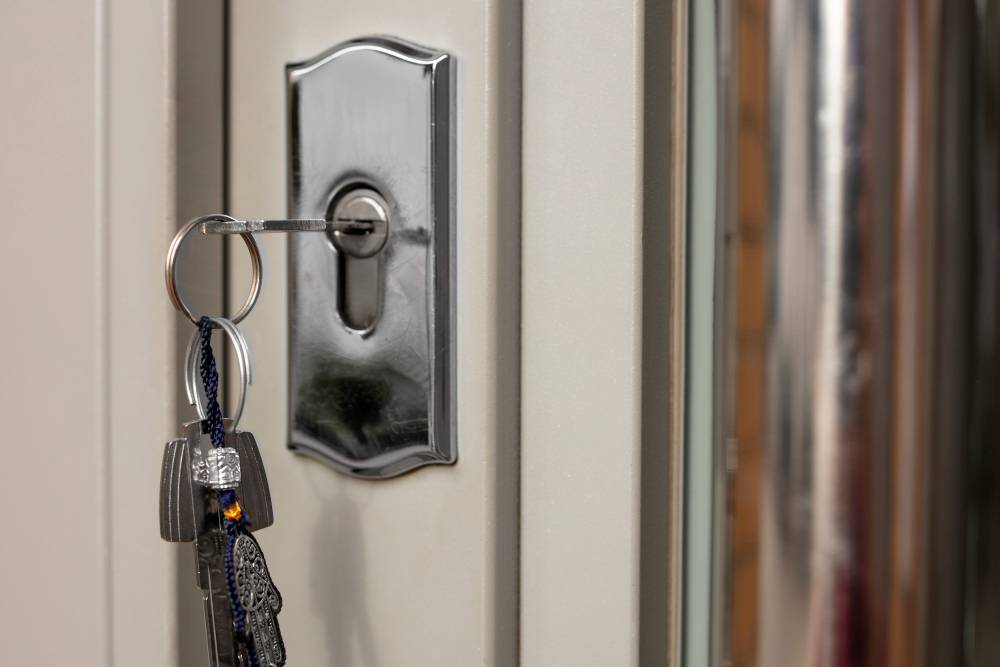

Locksmithing is the work of creating and bypassing locks. Locksmithing is a traditional trade and in many countries requires completion of an apprenticeship. The level of formal education legally required varies by country, ranging from no formal education to a training certificate awarded by an employer, or a full diploma from an engineering college, along with time spent as an apprentice.
A lock is a mechanism that secures buildings, rooms, cabinets, objects, or other storage facilities. A "smith" is a metalworker who shapes metal pieces, often using a forge or mould, into useful objects or to be part of a more complex structure. Thus locksmithing, as its name implies, is the assembly and designing of locks and their respective keys by hand. Most locksmiths use both automatic and manual cutting tools to mold keys, with many of these tools being powered by batteries or mains electricity.
Locks have been constructed for over 2500 years, initially out of wood and later out of metal.[1] Historically, locksmiths would make the entire lock, working for hours hand cutting screws and doing much file-work. Lock designs became significantly more complicated in the 18th century, and locksmiths often specialized in repairing or designing locks.
Although replacing lost keys for automobiles and homes, as well as rekeying locks for security purposes, remains an important part of locksmithing, a 1976 US Government publication noted that modern locksmiths are primarily involved in installing high-quality lock-sets and managing keying and key control systems.
Most locksmiths also provide electronic lock services, such as programming smart keys for transponder-equipped vehicles and implementing access control systems to protect individuals and assets for large institutions.[2] Many also specialise in other areas such as:
In Australia, prospective locksmiths are required to take a Technical and Further Education (TAFE) course in locksmithing, completion of which leads to issuance of a Level 3 Australian Qualifications Framework certificate, and complete an apprenticeship. They must also pass a criminal records check certifying that they are not currently wanted by the police. Apprenticeships can last one to four years. Course requirements are variable: there is a minimal requirements version that requires fewer total training units, and a fuller version that teaches more advanced skills, but takes more time to complete. Apprenticeship and course availability vary by state or territory.[3]
In Ireland, licensing for locksmiths was introduced in 2016,[4] with locksmiths having to obtain a Private Security Authority license. The Irish Locksmith Organisation has 50 members with ongoing training to ensure all members are up-to-date with knowledge and skills.
In the UK, there is no current government regulation for locksmithing, so effectively anyone can trade and operate as a locksmith with no skill or knowledge of the industry.[5]
Fifteen states in the United States require licensure for locksmiths. Nassau County and New York City in New York State, and Hillsborough County and Miami-Dade County in Florida have their own licensing laws.[6] State and local laws are described in the table below. 15 states require locksmith licensing: Alabama, California, Connecticut, Illinois, Louisiana, Maryland, Nebraska, New Jersey, Nevada, North Carolina, Oklahoma, Oregon, Tennessee, Texas and Virginia
| State | Regulatory body | Requirements |
|---|---|---|
| Alabama | Alabama Electronic Security Board of Licensure | Certification course, continuing education, background check every two years |
| California | California Department of Consumer Affairs, California Contractors State License Board; California Bureau of Security and Investigative Services | California requires a C-28 Lock and Security Equipment Contractor license, with renewal every two years, in addition to a background check.[8][9] |
| Connecticut | Department of Consumer Protection | Background check, registration (renews biennially) |
| Florida | No statewide regulation. Counties of Hillsborough and Miami-Dade require licensure for locksmiths and locksmith firms. Miami-Dade's ordinance covers locksmithing, as well as the installation of security alarm closed-circuit television systems. | Miami-Dade: must register with county and receive license. Each business performing locksmith services must have at least one license-holder in its employ. Fingerprinting and criminal background check accompany license application. Initial applicants must have a locksmith permit for one year before full licensure. Any work involving electrical systems must be done by someone who also holds a state electrician's or contractor's license.[10] Hillsborough: must apply for a biennial locksmith license. The cost is $500 for an individual or firm of up to five employees, $750 for a firm of six to ten employees, and $1000 for a firm of more than ten employees. A background check and proof of insurance are also required.[11]: 1 Pinellas County: The City of Clearwater requires fingerprints applied by Clearwater police. |
| Illinois | Illinois Department of Financial and Professional Regulation | Must not have been convicted of a felony in the last ten years, must take twenty-hour licensure course, must pass examination[12] |
| Louisiana | Louisiana Office of State Fire Marshall | Must pass examination, pay initial registration of $250, and maintain registration for $50 annually thereafter. Additional training and certification are required for locksmiths dealing with locks on fire and safety equipment and alarm systems.[13] |
| Maryland | Maryland Locksmith Licensing Program, Maryland Department of Labor | Must apply for a license and submit to a criminal records check, and after issue, must carry a state-issued locksmith license card at all times when performing work. Prior felony and misdemeanor convictions will be weighed by the Secretary of Labor according to statutorily-determined factors, including length of time since the offense and applicant's behavior since, when deciding to grant or withhold a license. The licensee must carry liability insurance, and submit proof of insurance to the secretary.[14] |
| Nebraska | County Clerk | Registration with the county clerk in the county in which the locksmith's business is located |
| Nevada | County Sheriff | Must not be in arrears on child support, and must register with the county sheriff of the county in which the business is located |
| New Jersey | New Jersey Board of Examiners of Electrical Contractors | Must be at least eighteen years of age, must complete three years of supervised locksmith work, working an average of at least twenty hours a week, or complete a formal two-year apprenticeship in a program approved by the United States Department of Labor, must not have been convicted of certain crimes within a ten-year period prior to application, and must pass an examination before being granted license.[15] |
| New York | No statewide licensing requirement. In Nassau County, a county license is required.[16] | Nassau County requirements include submission of passport-style photos for photo identification license card for the principal applicant; business or home address and phone number and proof of number operability in the form of a recent telephone bill; a listing of all employees and officers of the company along with passport photos; recent utility bill for the business location if the business is not operated from home; a statement of all criminal convictions for all employees and officers, along with court records if requested; statement all trade names used by the business, and incorporation documents, if applicable; proof of insurance; proof of workers' compensation registration; a federal employee identification number, and a state sales tax number, if applicable; and fingerprint records for all applicants, in addition to a non-refundable processing fee.[17]: 2–3 |
| North Carolina | North Carolina Locksmith Licensing Board | Must submit documentation of criminal history. Must submit documentation of out-of-state licenses, immigration status, and military discharge, if applicable. May optionally submit training certifications and other data. Must pay an initial license fee and subsequent annual renewal fees and keep license on person at all times. Must notify state of any employees operating under the owner's locksmith license. All apprentices must be themselves licensed under an apprentice license, and may not perform certain services, except under the direct supervision of a full locksmith license holder.[18][19] |
| Oklahoma | Alarm, Locksmith, & Fire Sprinkler Program, Oklahoma Department of Labor | Must not have been convicted of a felony and must register with Alarm, Locksmith, & Fire Sprinkler Program[20] |
| Oregon | Oregon Construction Contractors Board | Must pass a criminal background check, pass a license examination, and renew registration biennially |
| Tennessee | Tennessee Department of Commerce and Insurance | Must provide documentation of citizenship or legal residency, any criminal convictions, all changes of address; business license in county or city where business operates, or a notarized statement that services will be for an employer or association and not offered directly to the public; otherwise, must submit documentation of application for, or employment by, a Tennessee Locksmith Company duly registered with the state. Conviction of a felony, or any level of drug, burglary, or breaking and entering offense may bar the applicant from licensure.[21] |
| Texas | Department of Public Safety Private Security Board | The owner or manager of a company providing locksmith services must hold a Locksmith Company License. To qualify for a license, the applicant must have two years service as a locksmith for a licensed company. Alternatively, the applicant may substitute one year's experience plus successful completion of a forty-eight hour licensure course, followed by successful completion of a comprehensive license examination.[22] |
| Virginia | Department of Criminal Justice Services | Must be over eighteen years of age. Must complete an eighteen-hour training course. Must undergo a criminal records check and submit fingerprints. Anyone convicted of a felony or misdemeanor (excluding traffic violations) in Virginia or any other jurisdiction must complete a supplemental Criminal History form detailing the circumstances of arrest and conviction, completion of sentence, and any record pertaining to parole or probation. Any false statements or omissions can provide grounds for denial of license and possible criminal sanctions.[23][24] |

Locksmiths may be commercial (working out of a storefront), mobile (working out of a vehicle), institutional (employed by an institution) or investigatory (forensic locksmiths) or may specialize in one aspect of the skill, such as an automotive lock specialist, a master key system specialist or a safe technician.[2] Many locksmiths also work as security consultants, but not all security consultants possess locksmithing skills. Locksmiths are frequently certified in specific skill areas or to a level of skill within the trade. This is separate from certificates of completion of training courses. In determining skill levels, certifications from manufacturers or locksmith associations are usually more valid criteria than certificates of completion. Some locksmiths decide to call themselves "Master Locksmiths" whether they are fully trained or not, and some training certificates appear quite authoritative.
The majority of locksmiths also work on any existing door hardware, not just locking mechanisms. This includes door closers, door hinges, electric strikes, frame repairs and other door hardware.
The issue of full disclosure was first raised in the context of locksmithing, in a 19th-century controversy regarding whether weaknesses in lock systems should be kept secret in the locksmithing community, or revealed to the public.
According to A. C. Hobbs:
A commercial, and in some respects a social doubt has been started within the last year or two, whether or not it is right to discuss so openly the security or insecurity of locks. Many well-meaning persons suppose that the discussion respecting the means for baffling the supposed safety of locks offers a premium for dishonesty, by showing others how to be dishonest. This is a fallacy. Rogues are very keen in their profession, and know already much more than we can teach them respecting their several kinds of roguery.
Rogues knew a good deal about lock-picking long before locksmiths discussed it among themselves, as they have lately done. If a lock, let it have been made in whatever country, or by whatever maker, is not so inviolable as it has hitherto been deemed to be, surely it is to the interest of honest persons to know this fact, because the dishonest are tolerably certain to apply the knowledge practically; and the spread of the knowledge is necessary to give fair play to those who might suffer by ignorance.
It cannot be too earnestly urged that an acquaintance with real facts will, in the end, be better for all parties. Some time ago, when the reading public was alarmed at being told how London milk is adulterated, timid persons deprecated the exposure, on the plea that it would give instructions in the art of adulterating milk; a vain fear, milkmen knew all about it before, whether they practised it or not; and the exposure only taught purchasers the necessity of a little scrutiny and caution, leaving them to obey this necessity or not, as they pleased.

 Media related to Locksmithing at Wikimedia Commons
| Fundamental concepts | |
|---|---|
| Lock hardware | |
| Keys | |
| Mechanical locks | |
| Electronic locks | |
| Other lock types | |
| Lock picking | |
| Door hardware | |
| Emergency access/exit | |
| Security alarms |
|
| Miscellaneous | |
Locksmithing is the work of creating and bypassing locks. Locksmithing is a traditional trade and in many countries requires completion of an apprenticeship. The level of formal education legally required varies by country, ranging from no formal education to a training certificate awarded by an employer, or a full diploma from an engineering college, along with time spent as an apprentice.
A lock is a mechanism that secures buildings, rooms, cabinets, objects, or other storage facilities. A "smith" is a metalworker who shapes metal pieces, often using a forge or mould, into useful objects or to be part of a more complex structure. Thus locksmithing, as its name implies, is the assembly and designing of locks and their respective keys by hand. Most locksmiths use both automatic and manual cutting tools to mold keys, with many of these tools being powered by batteries or mains electricity.
Locks have been constructed for over 2500 years, initially out of wood and later out of metal.[1] Historically, locksmiths would make the entire lock, working for hours hand cutting screws and doing much file-work. Lock designs became significantly more complicated in the 18th century, and locksmiths often specialized in repairing or designing locks.
Although replacing lost keys for automobiles and homes, as well as rekeying locks for security purposes, remains an important part of locksmithing, a 1976 US Government publication noted that modern locksmiths are primarily involved in installing high-quality lock-sets and managing keying and key control systems.
Most locksmiths also provide electronic lock services, such as programming smart keys for transponder-equipped vehicles and implementing access control systems to protect individuals and assets for large institutions.[2] Many also specialise in other areas such as:
In Australia, prospective locksmiths are required to take a Technical and Further Education (TAFE) course in locksmithing, completion of which leads to issuance of a Level 3 Australian Qualifications Framework certificate, and complete an apprenticeship. They must also pass a criminal records check certifying that they are not currently wanted by the police. Apprenticeships can last one to four years. Course requirements are variable: there is a minimal requirements version that requires fewer total training units, and a fuller version that teaches more advanced skills, but takes more time to complete. Apprenticeship and course availability vary by state or territory.[3]
In Ireland, licensing for locksmiths was introduced in 2016,[4] with locksmiths having to obtain a Private Security Authority license. The Irish Locksmith Organisation has 50 members with ongoing training to ensure all members are up-to-date with knowledge and skills.
In the UK, there is no current government regulation for locksmithing, so effectively anyone can trade and operate as a locksmith with no skill or knowledge of the industry.[5]
Fifteen states in the United States require licensure for locksmiths. Nassau County and New York City in New York State, and Hillsborough County and Miami-Dade County in Florida have their own licensing laws.[6] State and local laws are described in the table below. 15 states require locksmith licensing: Alabama, California, Connecticut, Illinois, Louisiana, Maryland, Nebraska, New Jersey, Nevada, North Carolina, Oklahoma, Oregon, Tennessee, Texas and Virginia
| State | Regulatory body | Requirements |
|---|---|---|
| Alabama | Alabama Electronic Security Board of Licensure | Certification course, continuing education, background check every two years |
| California | California Department of Consumer Affairs, California Contractors State License Board; California Bureau of Security and Investigative Services | California requires a C-28 Lock and Security Equipment Contractor license, with renewal every two years, in addition to a background check.[8][9] |
| Connecticut | Department of Consumer Protection | Background check, registration (renews biennially) |
| Florida | No statewide regulation. Counties of Hillsborough and Miami-Dade require licensure for locksmiths and locksmith firms. Miami-Dade's ordinance covers locksmithing, as well as the installation of security alarm closed-circuit television systems. | Miami-Dade: must register with county and receive license. Each business performing locksmith services must have at least one license-holder in its employ. Fingerprinting and criminal background check accompany license application. Initial applicants must have a locksmith permit for one year before full licensure. Any work involving electrical systems must be done by someone who also holds a state electrician's or contractor's license.[10] Hillsborough: must apply for a biennial locksmith license. The cost is $500 for an individual or firm of up to five employees, $750 for a firm of six to ten employees, and $1000 for a firm of more than ten employees. A background check and proof of insurance are also required.[11]: 1 Pinellas County: The City of Clearwater requires fingerprints applied by Clearwater police. |
| Illinois | Illinois Department of Financial and Professional Regulation | Must not have been convicted of a felony in the last ten years, must take twenty-hour licensure course, must pass examination[12] |
| Louisiana | Louisiana Office of State Fire Marshall | Must pass examination, pay initial registration of $250, and maintain registration for $50 annually thereafter. Additional training and certification are required for locksmiths dealing with locks on fire and safety equipment and alarm systems.[13] |
| Maryland | Maryland Locksmith Licensing Program, Maryland Department of Labor | Must apply for a license and submit to a criminal records check, and after issue, must carry a state-issued locksmith license card at all times when performing work. Prior felony and misdemeanor convictions will be weighed by the Secretary of Labor according to statutorily-determined factors, including length of time since the offense and applicant's behavior since, when deciding to grant or withhold a license. The licensee must carry liability insurance, and submit proof of insurance to the secretary.[14] |
| Nebraska | County Clerk | Registration with the county clerk in the county in which the locksmith's business is located |
| Nevada | County Sheriff | Must not be in arrears on child support, and must register with the county sheriff of the county in which the business is located |
| New Jersey | New Jersey Board of Examiners of Electrical Contractors | Must be at least eighteen years of age, must complete three years of supervised locksmith work, working an average of at least twenty hours a week, or complete a formal two-year apprenticeship in a program approved by the United States Department of Labor, must not have been convicted of certain crimes within a ten-year period prior to application, and must pass an examination before being granted license.[15] |
| New York | No statewide licensing requirement. In Nassau County, a county license is required.[16] | Nassau County requirements include submission of passport-style photos for photo identification license card for the principal applicant; business or home address and phone number and proof of number operability in the form of a recent telephone bill; a listing of all employees and officers of the company along with passport photos; recent utility bill for the business location if the business is not operated from home; a statement of all criminal convictions for all employees and officers, along with court records if requested; statement all trade names used by the business, and incorporation documents, if applicable; proof of insurance; proof of workers' compensation registration; a federal employee identification number, and a state sales tax number, if applicable; and fingerprint records for all applicants, in addition to a non-refundable processing fee.[17]: 2–3 |
| North Carolina | North Carolina Locksmith Licensing Board | Must submit documentation of criminal history. Must submit documentation of out-of-state licenses, immigration status, and military discharge, if applicable. May optionally submit training certifications and other data. Must pay an initial license fee and subsequent annual renewal fees and keep license on person at all times. Must notify state of any employees operating under the owner's locksmith license. All apprentices must be themselves licensed under an apprentice license, and may not perform certain services, except under the direct supervision of a full locksmith license holder.[18][19] |
| Oklahoma | Alarm, Locksmith, & Fire Sprinkler Program, Oklahoma Department of Labor | Must not have been convicted of a felony and must register with Alarm, Locksmith, & Fire Sprinkler Program[20] |
| Oregon | Oregon Construction Contractors Board | Must pass a criminal background check, pass a license examination, and renew registration biennially |
| Tennessee | Tennessee Department of Commerce and Insurance | Must provide documentation of citizenship or legal residency, any criminal convictions, all changes of address; business license in county or city where business operates, or a notarized statement that services will be for an employer or association and not offered directly to the public; otherwise, must submit documentation of application for, or employment by, a Tennessee Locksmith Company duly registered with the state. Conviction of a felony, or any level of drug, burglary, or breaking and entering offense may bar the applicant from licensure.[21] |
| Texas | Department of Public Safety Private Security Board | The owner or manager of a company providing locksmith services must hold a Locksmith Company License. To qualify for a license, the applicant must have two years service as a locksmith for a licensed company. Alternatively, the applicant may substitute one year's experience plus successful completion of a forty-eight hour licensure course, followed by successful completion of a comprehensive license examination.[22] |
| Virginia | Department of Criminal Justice Services | Must be over eighteen years of age. Must complete an eighteen-hour training course. Must undergo a criminal records check and submit fingerprints. Anyone convicted of a felony or misdemeanor (excluding traffic violations) in Virginia or any other jurisdiction must complete a supplemental Criminal History form detailing the circumstances of arrest and conviction, completion of sentence, and any record pertaining to parole or probation. Any false statements or omissions can provide grounds for denial of license and possible criminal sanctions.[23][24] |
Locksmiths may be commercial (working out of a storefront), mobile (working out of a vehicle), institutional (employed by an institution) or investigatory (forensic locksmiths) or may specialize in one aspect of the skill, such as an automotive lock specialist, a master key system specialist or a safe technician.[2] Many locksmiths also work as security consultants, but not all security consultants possess locksmithing skills. Locksmiths are frequently certified in specific skill areas or to a level of skill within the trade. This is separate from certificates of completion of training courses. In determining skill levels, certifications from manufacturers or locksmith associations are usually more valid criteria than certificates of completion. Some locksmiths decide to call themselves "Master Locksmiths" whether they are fully trained or not, and some training certificates appear quite authoritative.
The majority of locksmiths also work on any existing door hardware, not just locking mechanisms. This includes door closers, door hinges, electric strikes, frame repairs and other door hardware.
The issue of full disclosure was first raised in the context of locksmithing, in a 19th-century controversy regarding whether weaknesses in lock systems should be kept secret in the locksmithing community, or revealed to the public.
According to A. C. Hobbs:
A commercial, and in some respects a social doubt has been started within the last year or two, whether or not it is right to discuss so openly the security or insecurity of locks. Many well-meaning persons suppose that the discussion respecting the means for baffling the supposed safety of locks offers a premium for dishonesty, by showing others how to be dishonest. This is a fallacy. Rogues are very keen in their profession, and know already much more than we can teach them respecting their several kinds of roguery.
Rogues knew a good deal about lock-picking long before locksmiths discussed it among themselves, as they have lately done. If a lock, let it have been made in whatever country, or by whatever maker, is not so inviolable as it has hitherto been deemed to be, surely it is to the interest of honest persons to know this fact, because the dishonest are tolerably certain to apply the knowledge practically; and the spread of the knowledge is necessary to give fair play to those who might suffer by ignorance.
It cannot be too earnestly urged that an acquaintance with real facts will, in the end, be better for all parties. Some time ago, when the reading public was alarmed at being told how London milk is adulterated, timid persons deprecated the exposure, on the plea that it would give instructions in the art of adulterating milk; a vain fear, milkmen knew all about it before, whether they practised it or not; and the exposure only taught purchasers the necessity of a little scrutiny and caution, leaving them to obey this necessity or not, as they pleased.
Media related to Locksmithing at Wikimedia Commons| Fundamental concepts | |
|---|---|
| Lock hardware | |
| Keys | |
| Mechanical locks | |
| Electronic locks | |
| Other lock types | |
| Lock picking | |
| Door hardware | |
| Emergency access/exit | |
| Security alarms |
|
| Miscellaneous | |
Locksmithing is the work of creating and bypassing locks. Locksmithing is a traditional trade and in many countries requires completion of an apprenticeship. The level of formal education legally required varies by country, ranging from no formal education to a training certificate awarded by an employer, or a full diploma from an engineering college, along with time spent as an apprentice.
A lock is a mechanism that secures buildings, rooms, cabinets, objects, or other storage facilities. A "smith" is a metalworker who shapes metal pieces, often using a forge or mould, into useful objects or to be part of a more complex structure. Thus locksmithing, as its name implies, is the assembly and designing of locks and their respective keys by hand. Most locksmiths use both automatic and manual cutting tools to mold keys, with many of these tools being powered by batteries or mains electricity.
Locks have been constructed for over 2500 years, initially out of wood and later out of metal.[1] Historically, locksmiths would make the entire lock, working for hours hand cutting screws and doing much file-work. Lock designs became significantly more complicated in the 18th century, and locksmiths often specialized in repairing or designing locks.
Although replacing lost keys for automobiles and homes, as well as rekeying locks for security purposes, remains an important part of locksmithing, a 1976 US Government publication noted that modern locksmiths are primarily involved in installing high-quality lock-sets and managing keying and key control systems.
Most locksmiths also provide electronic lock services, such as programming smart keys for transponder-equipped vehicles and implementing access control systems to protect individuals and assets for large institutions.[2] Many also specialise in other areas such as:
In Australia, prospective locksmiths are required to take a Technical and Further Education (TAFE) course in locksmithing, completion of which leads to issuance of a Level 3 Australian Qualifications Framework certificate, and complete an apprenticeship. They must also pass a criminal records check certifying that they are not currently wanted by the police. Apprenticeships can last one to four years. Course requirements are variable: there is a minimal requirements version that requires fewer total training units, and a fuller version that teaches more advanced skills, but takes more time to complete. Apprenticeship and course availability vary by state or territory.[3]
In Ireland, licensing for locksmiths was introduced in 2016,[4] with locksmiths having to obtain a Private Security Authority license. The Irish Locksmith Organisation has 50 members with ongoing training to ensure all members are up-to-date with knowledge and skills.
In the UK, there is no current government regulation for locksmithing, so effectively anyone can trade and operate as a locksmith with no skill or knowledge of the industry.[5]
Fifteen states in the United States require licensure for locksmiths. Nassau County and New York City in New York State, and Hillsborough County and Miami-Dade County in Florida have their own licensing laws.[6] State and local laws are described in the table below. 15 states require locksmith licensing: Alabama, California, Connecticut, Illinois, Louisiana, Maryland, Nebraska, New Jersey, Nevada, North Carolina, Oklahoma, Oregon, Tennessee, Texas and Virginia
| State | Regulatory body | Requirements |
|---|---|---|
| Alabama | Alabama Electronic Security Board of Licensure | Certification course, continuing education, background check every two years |
| California | California Department of Consumer Affairs, California Contractors State License Board; California Bureau of Security and Investigative Services | California requires a C-28 Lock and Security Equipment Contractor license, with renewal every two years, in addition to a background check.[8][9] |
| Connecticut | Department of Consumer Protection | Background check, registration (renews biennially) |
| Florida | No statewide regulation. Counties of Hillsborough and Miami-Dade require licensure for locksmiths and locksmith firms. Miami-Dade's ordinance covers locksmithing, as well as the installation of security alarm closed-circuit television systems. | Miami-Dade: must register with county and receive license. Each business performing locksmith services must have at least one license-holder in its employ. Fingerprinting and criminal background check accompany license application. Initial applicants must have a locksmith permit for one year before full licensure. Any work involving electrical systems must be done by someone who also holds a state electrician's or contractor's license.[10] Hillsborough: must apply for a biennial locksmith license. The cost is $500 for an individual or firm of up to five employees, $750 for a firm of six to ten employees, and $1000 for a firm of more than ten employees. A background check and proof of insurance are also required.[11]: 1 Pinellas County: The City of Clearwater requires fingerprints applied by Clearwater police. |
| Illinois | Illinois Department of Financial and Professional Regulation | Must not have been convicted of a felony in the last ten years, must take twenty-hour licensure course, must pass examination[12] |
| Louisiana | Louisiana Office of State Fire Marshall | Must pass examination, pay initial registration of $250, and maintain registration for $50 annually thereafter. Additional training and certification are required for locksmiths dealing with locks on fire and safety equipment and alarm systems.[13] |
| Maryland | Maryland Locksmith Licensing Program, Maryland Department of Labor | Must apply for a license and submit to a criminal records check, and after issue, must carry a state-issued locksmith license card at all times when performing work. Prior felony and misdemeanor convictions will be weighed by the Secretary of Labor according to statutorily-determined factors, including length of time since the offense and applicant's behavior since, when deciding to grant or withhold a license. The licensee must carry liability insurance, and submit proof of insurance to the secretary.[14] |
| Nebraska | County Clerk | Registration with the county clerk in the county in which the locksmith's business is located |
| Nevada | County Sheriff | Must not be in arrears on child support, and must register with the county sheriff of the county in which the business is located |
| New Jersey | New Jersey Board of Examiners of Electrical Contractors | Must be at least eighteen years of age, must complete three years of supervised locksmith work, working an average of at least twenty hours a week, or complete a formal two-year apprenticeship in a program approved by the United States Department of Labor, must not have been convicted of certain crimes within a ten-year period prior to application, and must pass an examination before being granted license.[15] |
| New York | No statewide licensing requirement. In Nassau County, a county license is required.[16] | Nassau County requirements include submission of passport-style photos for photo identification license card for the principal applicant; business or home address and phone number and proof of number operability in the form of a recent telephone bill; a listing of all employees and officers of the company along with passport photos; recent utility bill for the business location if the business is not operated from home; a statement of all criminal convictions for all employees and officers, along with court records if requested; statement all trade names used by the business, and incorporation documents, if applicable; proof of insurance; proof of workers' compensation registration; a federal employee identification number, and a state sales tax number, if applicable; and fingerprint records for all applicants, in addition to a non-refundable processing fee.[17]: 2–3 |
| North Carolina | North Carolina Locksmith Licensing Board | Must submit documentation of criminal history. Must submit documentation of out-of-state licenses, immigration status, and military discharge, if applicable. May optionally submit training certifications and other data. Must pay an initial license fee and subsequent annual renewal fees and keep license on person at all times. Must notify state of any employees operating under the owner's locksmith license. All apprentices must be themselves licensed under an apprentice license, and may not perform certain services, except under the direct supervision of a full locksmith license holder.[18][19] |
| Oklahoma | Alarm, Locksmith, & Fire Sprinkler Program, Oklahoma Department of Labor | Must not have been convicted of a felony and must register with Alarm, Locksmith, & Fire Sprinkler Program[20] |
| Oregon | Oregon Construction Contractors Board | Must pass a criminal background check, pass a license examination, and renew registration biennially |
| Tennessee | Tennessee Department of Commerce and Insurance | Must provide documentation of citizenship or legal residency, any criminal convictions, all changes of address; business license in county or city where business operates, or a notarized statement that services will be for an employer or association and not offered directly to the public; otherwise, must submit documentation of application for, or employment by, a Tennessee Locksmith Company duly registered with the state. Conviction of a felony, or any level of drug, burglary, or breaking and entering offense may bar the applicant from licensure.[21] |
| Texas | Department of Public Safety Private Security Board | The owner or manager of a company providing locksmith services must hold a Locksmith Company License. To qualify for a license, the applicant must have two years service as a locksmith for a licensed company. Alternatively, the applicant may substitute one year's experience plus successful completion of a forty-eight hour licensure course, followed by successful completion of a comprehensive license examination.[22] |
| Virginia | Department of Criminal Justice Services | Must be over eighteen years of age. Must complete an eighteen-hour training course. Must undergo a criminal records check and submit fingerprints. Anyone convicted of a felony or misdemeanor (excluding traffic violations) in Virginia or any other jurisdiction must complete a supplemental Criminal History form detailing the circumstances of arrest and conviction, completion of sentence, and any record pertaining to parole or probation. Any false statements or omissions can provide grounds for denial of license and possible criminal sanctions.[23][24] |
Locksmiths may be commercial (working out of a storefront), mobile (working out of a vehicle), institutional (employed by an institution) or investigatory (forensic locksmiths) or may specialize in one aspect of the skill, such as an automotive lock specialist, a master key system specialist or a safe technician.[2] Many locksmiths also work as security consultants, but not all security consultants possess locksmithing skills. Locksmiths are frequently certified in specific skill areas or to a level of skill within the trade. This is separate from certificates of completion of training courses. In determining skill levels, certifications from manufacturers or locksmith associations are usually more valid criteria than certificates of completion. Some locksmiths decide to call themselves "Master Locksmiths" whether they are fully trained or not, and some training certificates appear quite authoritative.
The majority of locksmiths also work on any existing door hardware, not just locking mechanisms. This includes door closers, door hinges, electric strikes, frame repairs and other door hardware.
The issue of full disclosure was first raised in the context of locksmithing, in a 19th-century controversy regarding whether weaknesses in lock systems should be kept secret in the locksmithing community, or revealed to the public.
According to A. C. Hobbs:
A commercial, and in some respects a social doubt has been started within the last year or two, whether or not it is right to discuss so openly the security or insecurity of locks. Many well-meaning persons suppose that the discussion respecting the means for baffling the supposed safety of locks offers a premium for dishonesty, by showing others how to be dishonest. This is a fallacy. Rogues are very keen in their profession, and know already much more than we can teach them respecting their several kinds of roguery.
Rogues knew a good deal about lock-picking long before locksmiths discussed it among themselves, as they have lately done. If a lock, let it have been made in whatever country, or by whatever maker, is not so inviolable as it has hitherto been deemed to be, surely it is to the interest of honest persons to know this fact, because the dishonest are tolerably certain to apply the knowledge practically; and the spread of the knowledge is necessary to give fair play to those who might suffer by ignorance.
It cannot be too earnestly urged that an acquaintance with real facts will, in the end, be better for all parties. Some time ago, when the reading public was alarmed at being told how London milk is adulterated, timid persons deprecated the exposure, on the plea that it would give instructions in the art of adulterating milk; a vain fear, milkmen knew all about it before, whether they practised it or not; and the exposure only taught purchasers the necessity of a little scrutiny and caution, leaving them to obey this necessity or not, as they pleased.
Media related to Locksmithing at Wikimedia Commons| Fundamental concepts | |
|---|---|
| Lock hardware | |
| Keys | |
| Mechanical locks | |
| Electronic locks | |
| Other lock types | |
| Lock picking | |
| Door hardware | |
| Emergency access/exit | |
| Security alarms |
|
| Miscellaneous | |
You're likely wondering how mobile key duplication aligns with sustainability. While not covered earlier, it's crucial to know that adopting eco-friendly practices and materials is key to reducing the environmental impact of such services.
To ensure your key duplication request's security and privacy, The Lock Doc implements strict confidentiality policies, utilizes secure handling procedures, and requires verification before proceeding. They're committed to protecting your information throughout the duplication process.
You're wondering if high-security or restricted keys are beyond what the mobile service can duplicate. It's a valid concern, as these types often have specific duplication restrictions not typically handled by standard mobile services.


